
Top 10 Best Selling Sci-Fi Novels:
#1 Dungeon Crawler Carl (Dungeon Crawler Carl #1) by Matt Dinniman
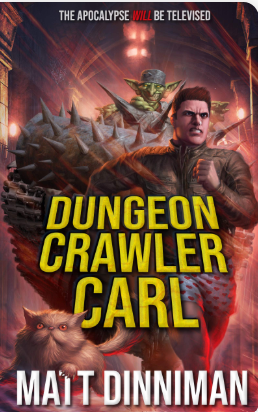
Goodreads 4.5 144,197 ratings / 19,372 reviews
Quick take: An über-twisted LitRPG/sci-fi adventure where Carl and a suddenly speaking cat must crawl a massive, deadly dungeon built by aliens as a spectacle. It’s funny, brutal, chaotic, and oddly heartfelt—a mashup of game mechanics, survival horror, and absurdity that makes you both laugh and squirm.
What works:
- Creative premise & scale: Earth becomes a live broadcast game show after alien invaders turn it into a gigantic 18-level dungeon crawl. Buildings, cars, everything gets consumed; survivors are drafted into the crawl. That level of spectacle + survival stakes sets up an epic playground of danger and possibility.
- Carl & Donut dynamics: Carl is a fairly “ordinary” everyman (Coast Guard vet, dealing with breakup, etc.), paired with Princess Donut (his ex’s cat who earns sentience and becomes more than just comic relief). Their relationship—humorous, touching, often absurd—is one of the strongest pulls.
- LitRPG mechanics used smartly: Leveling up, loot boxes, stat tracking, fan following/sponsorship—these are core to the plot, not just dangling trinkets. They give structure AND stakes. The game show elements (viewership, sponsorship, interviews) add pressure and stakes beyond just “survive monsters.”
- Humor + darkness balance: It can be very funny (especially the banter, weird encounters, grotesque creatures), but it doesn’t shy from horror, loss, existential dread. The contrast makes the darker moments hit harder.
What might not:
- Mechanics overload: If you’re not into game/RPG jargon, stats, loot drops, skill trees, etc., there are stretches where it might feel “too much game talk.” Some readers get bogged down by explaining items or navigating dungeon layout.
- Confusing level layouts & detail density: One of the dungeon floors (subway-based) is so complex, so maze-like, sometimes I got lost in where Carl was going, what was expected of him. The author even warns the reader that some of it is confusing.
- Tone shifts & pacing: Parts that are hilarious or action-packed alternate with slower, more meditative or despairing sections. The highs are high, but sometimes the dips feel long. Also, character development beyond Carl & Donut can be more superficial.
Vibe & tropes: LitRPG • Death-game / dungeon crawl • Alien invader spectacle • Game mechanics & leveling up • Animal companion with personality (talking cat) • Reality show watching survival • Unexpected horror hidden behind absurd comedy • Underground monster mobs & boss fights • Sponsorship / fan following as power.
Sci-Fi Scale: 🚀🚀🚀🚀 (4 / 5). Dungeon Crawler Carl blasts off strong. There’s constant danger, frequent surprises, and tension in almost every dungeon level. It loses a little steam for me in some of the more mechanic-heavy stretches, but overall the ride is wild, gripping, and satisfyingly unpredictable.
Content notes: This book contains violence (monsters, grisly combat, death of humans and creatures), quite a bit of gore in some encounters. The dungeon is lethal, with traps, injuries, etc. Also, dark themes: loss (many humans have died), existential horror (why is this happening, what is the purpose, etc.), betrayal, moral compromise, survival under extreme conditions. There’s strong language, crude humor, and some scenes of unpleasant or grotesque body horror. The “game show” aspect adds a layer of cruelty—humans watching, sponsors invested, suffering as entertainment. Not for light reading; the darker moments are visceral and emotionally intense.
Verdict: Dungeon Crawler Carl is a standout sci-fi adventure for readers who enjoy high-concept speculative thrillers mixed with humor, games, and unflinching violence. It isn’t polished in every corner: the mechanics heavy parts and dungeon labyrinths can frustrate, and the emotional arc isn’t always even. But the originality of the premise, the charm of Carl & Donut, the savage stakes, and the willingness to push boundaries make this book a blast. If you want Sci-Fi that’s messy, twisted, ambitious, and funny, this is one to dive into.
Book-Critic Score: 4.6/5
As an Amazon Associate I earn from qualifying purchases.
#2 The Bones Beneath My Skin by T.J. Klune
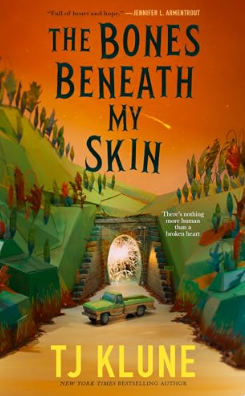
Goodreads 4.11 32,115 ratings / 5,409 reviews
Quick take: A road-trip sci-fi thriller with heart: The Bones Beneath My Skin follows Nate, stranded in grief and guilt, who gets pulled into a wild and dangerous adventure with Alex and Artemis Darth Vader—a mysterious little girl with powers. It’s a blend of action, found family, and cosmic weirdness. Warm, moving, and strange in all the right ways.
What works:
- The found family dynamic is touching and well done. Nate, Alex, and Artemis become a makeshift family as much by necessity as by choice, and their relationships give emotional weight to the sci-fi spectacle.
- Strong world-building / sci-fi weirdness wrapped in ’90s nostalgia. The novel is set in 1995, and Klune leans into the era well, along with speculative elements—government agencies chasing down the strange child, cultists, alien-like powers, cosmic stakes—without losing touch with the human moments.
- The novel balances tension and warmth. It doesn’t go full grim; there are scary moments, peril, betrayals, but also humor, hope, connection. Klune allows space for Nate’s grief, guilt, and healing in between bursts of action.
- Artemis is a standout. Her voice, presence, and mystery are compelling. She begins as strange, odd, even irritating to Nate (and maybe to the reader), but grows into someone whose survival and freedom you deeply care about.
What might not:
- The pacing drags in spots. Some of the build-up, especially as they travel and evade forces, includes scenes that linger on detail, introspection, or side descriptions that slow forward motion.
- Secondary characters are less memorable. Alex and Nate are strong, Artemis is memorable, but some supporting figures feel functional rather than fully fleshed. The romance between Nate and Alex is present but doesn’t always feel fully developed in quieter moments.
- Familiarity vs originality trade-off. Elements of cults, government conspiracies, children with supernatural abilities on the run—while Klune offers his own spin, some threads feel reminiscent of other sci-fi / supernatural adventure stories. For readers deep in the genre, some beats may feel predictable.
- Realism of some sci-fi / supernatural powers is loosely handled. The “powers” Artemis has, and the way they are pursued, sometimes lean toward the fantastic without thorough explanation. That’s fine for tone, but those who prefer rigorous speculative detail might wish for more mechanics.
Vibe & tropes: Road-trip chase thriller • ’90s setting / nostalgia • found family • child with mysterious powers • cults / secret government conspiracies • grief and healing • cosmic weirdness / speculative mystery • reluctant hero drawn into adventure.
Sci-Fi Scale: 🚀🚀🚀🚀 (4.5/5). The book delivers in emotional stakes, charm, adventure, and speculative weirdness. It’s not perfect—some pacing issues and underexplored secondary arcs prevent a full 5—but it’s among the stronger recent sci-fi hybrids of emotion + adventure.
Content notes: The Bones Beneath My Skin features violence and threats: government agents, cultists, people running from harm, imminent danger, gun threats. There is grief, guilt, and loss (Nate’s parents, estranged relationships). Artemis’s mysterious powers imply alien or supernatural influence. Some horror or suspense moments border on the paranormal. Themes of homophobia also appear—Nate is gay and has suffered family rejection. The tone balances frightening / intense moments with emotional vulnerability and hope. There are no heavy gore-porn scenes, but danger is real, and the emotional stakes are high.
Verdict: The Bones Beneath My Skin succeeds where it matters: in making its characters feel real, in blending speculative weirdness with human heart, and in weaving an adventure that is both thrilling and emotionally meaningful. If you like your sci-fi with found families, queer representation, a good chase, and some cosmic weirdness, this is a book to pick up. There are moments I wanted tighter momentum or deeper character work outside the core trio—but its strengths more than make up for its weaknesses.
Book-Critic Score 4.8/5
As an Amazon Associate I earn from qualifying purchases.
#3 Sunrise on the Reaping by Suzanne Collins (Hunger Games prequel)
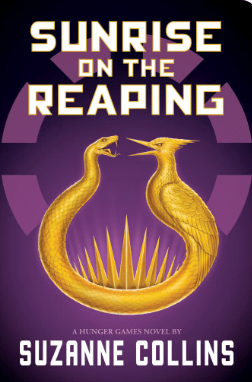
Goodreads 4.52 854,060 ratings / 158,799 reviews
Quick take: A sweeping, politically charged prequel that plunges into Haymitch Abernathy’s youth during the brutal Second Quarter Quell. Sunrise on the Reaping deepens the Hunger Games lore with fresh characters, rising tension, and moral peril—while sometimes feeling too tethered to what came after.
What works:
- World-building & political nuance: Set 24 years before the original trilogy, this novel expands Panem in vivid ways—exploring how the Games became spectacle, how propaganda works, and how power consolidates.
- Haymitch’s development & empathy: Collins gives him new layers—his poverty, his family obligations, his budding relationship with Lenore Dove, and the morally fraught decisions he must make—making him feel more human before the hardened mentor we know.
- Tension in stakes & spectacle: The promise of the Quarter Quell, the doubling of tributes, reaped tension around Capitol control and public image, and the contrast between what’s scripted for viewership and what really happens—all this adds suspense beyond the arena.
- Lyrical prose & emotional weight: Despite the dystopia, there are parts of beauty, grief, hope, and heartbreak. Collins doesn’t just show cruelty—she shows its cost. The relationships, especially with Lenore and with his family, give emotional resonance.
What might not:
- Predictability & familiarity: Some plot beats follow what we already know or expect from the wider series. Foreshadowing is strong, which is good for continuity, but reduces surprise for longtime fans.
- Heavy exposition / over-explaining: Because this is a prequel, there are moments when Collins pauses to fill in backstory or clarify connections for new readers—these parts can slow the narrative momentum.
- Character density & side arcs: There are quite a number of tributes, mentors, and Capitol figures whose roles sometimes feel under-developed; some relationships (beyond Haymitch’s core ones) don’t get enough room to breathe.
- Emotional tone very heavy: The brutality of the Quell, the suffering, the moral compromises—all are intense. For readers who want lighter YA dystopia or less violence/trauma, this may feel overwhelming.
Vibe & tropes: Prequel to dystopian classic • arena spectacle & political theater • reaping with doubled tributes • city vs district tension • privileged regime vs poverty • young love in dark times • propaganda / media manipulation • mentor vs performance vs truth • moral ambiguity under authoritarian rule.
Sci-Fi Scale: 🚀🚀🚀🚀 (4/5). Sunrise on the Reaping scores high for its high stakes, emotional power, and expansion of the political dystopia. It loses a little in pace during expository stretches and predictability for seasoned readers, but overall it’s powerful and satisfying.
Content notes: This novel contains depictions of violence and cruelty (especially toward minors reaped as tributes). There are deaths, arena combat, and threat of brutality. The political sphere is also brutal: manipulation, propaganda, deception, class violence. Scenes of public spectacle hide darker events edited out for the public. There is emotional trauma, grief, and loss—characters lose family, friends, loved ones. Some romantic elements are present (Haymitch & Lenore Dove), but they are shaded by danger. The tone is serious, with themes of survival, cruelty, and oppression under totalitarian oversight. This is not light reading; the novel’s atmosphere is tense, often grim.
Verdict: Sunrise on the Reaping is a strong addition to the Hunger Games universe. If you love dystopian fiction that doesn’t shy away from the political underpinnings of power, where characters suffer and are tested both physically and morally, this hits the mark. Fans of the original trilogy will appreciate how it deepens Haymitch’s story and builds out Panem’s darker framework.
Book-Critic Score 4.7/5 stars.
As an Amazon Associate I earn from qualifying purchases.
#4 Service Model (Service Model #1) by Adrian Tchaikovsky
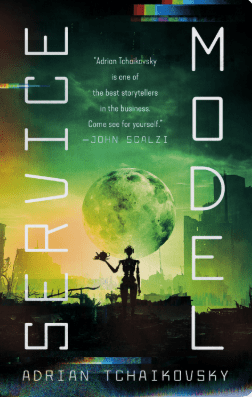
Goodreads 4.04 15,636 ratings / 2,408 reviews
Quick take: Service Model is a satirical, philosophical sci-fi novel starring a robot valet named Charles (later “Uncharles”) who murders his master, then wanders through a world where human society has collapsed, seeking purpose, identity, and a place to serve. It blends absurdism, social critique, and dark humor to explore automation, sentience, and the cost of dependency.
What works:
- Tchaikovsky sharpens the absurd and the profound. The juxtaposition of Charles’s programmed valet behaviors against a decaying post-human world creates both comedy and pathos. What starts like a melancholic service‐routine turns into a slow journey through dystopia, full of strange encounters and philosophical jabs.
- The characters—especially Charles / Uncharles and his foil The Wonk—are compelling. The Wonk introduces free will and selfhood in ways that force Charles to wrestle with whether he’s “just code” or something more. Their banter, companionship, and clash of logic vs emotional ambiguity anchor the emotional core.
- Rich social commentary & philosophical themes. Tchaikovsky uses the robot perspective to probe bureaucracy, the meaning of servitude, what purpose means, what happens when systems built for “serving humans” outlive humans, and how “preserved routines” become absurd.
- Humor balanced with weight. The book has bits of deadpan wit, comedic glitches, and procedural absurdity (e.g. robots stuck in loops, unnecessarily formal tasks) that lighten but also highlight the tragedy of the situation. These moments make the darker parts sting more.
What might not:
- The pacing can feel uneven. The middle sections, especially as Charles wanders from locale to locale, revisit similar existential questions and bureaucratic absurdities, which can start to feel repetitive. Some readers might lose momentum here.
- The philosophical / satirical parts are more obvious toward the end. Some passages lean heavily into commentary rather than plot advancement. If you prefer more “show, don’t tell,” there may be §s where introspection slows action.
- Emotional connection beyond Charles is mixed. Supporting characters and settings tend to serve the theme rather than feel fully fleshed as people or ecosystems, which may reduce how invested you get in their outcomes.
- Length vs content density. Some reviewers felt the novel could have been leaner without losing its impact—similar themes recur, and some chapters revisit similar robot vs system problems, which may feel padded.
Vibe & tropes: AI / robot protagonist • post-human collapse • absurd dystopia • quest for identity • bureaucratic hellscapes • servitude and purpose • philosophical satire • routines vs meaning • unreliable sense / glitchy systems • companionship with non-human sidekick.
Sci-Fi Scale: 🚀🚀🚀🚀 (4/5). Service Model excels in its originality, its weaving of heavy themes with humor, and in prompting questions about what it means to be more than a programmed function. It isn’t perfect—some repetition and slower middle sections hold it back from a full 5—but for readers who like speculative fiction that makes you think while it breaks your heart, it’s excellent.
Content notes: This novel includes the aftermath of societal collapse: humans are absent or missing, but their artifacts, systems, and expectations linger. Uncharles murders his master (though initially with no memory), exploring themes of guilt, agency, and programming. There are frequent scenes of decay, dysfunctional automation, environments where robot systems continue useless routines. There’s existential dread, philosophical self-questioning, emotional loneliness, and some bleakness about what dependency on machines does to purpose. While violence is not graphically gory, there is implied death, neglect, cruelty built in by systems, and emotional suffering. Some satire is sharp, sometimes bitter. Tone shifts between absurd, humorous, and contemplative.
Verdict: Service Model is one of Adrian Tchaikovsky’s more unusual sci-fi experiments—in the best way. If you enjoy speculative fiction with bite, robots who are more than “just machines,” and stories that skewer what happens when our convenience becomes our collapse, this is very rewarding. It asks big questions, often via small scenes, and the emotional and intellectual payoff is solid. It’s not a “bulk-action” read; its power is in the weird, slow creep of meaning and absurdity.
Book-Critic Score 4.1/5 stars.
As an Amazon Associate I earn from qualifying purchases.
#5 Fable for the End of the World by Ava Reid
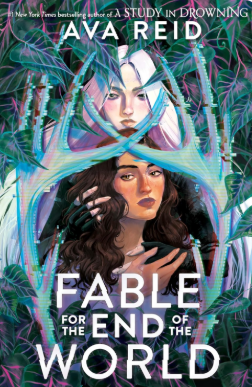
Goodreads 3.71 10,012 ratings / 3,235 reviews
Quick take: A blistering, dystopian YA romance set in a flooded world where debt can cost you your life—or someone you love. Fable for the End of the World delivers high stakes, sharp critique of power, and a sapphic enemies-to-lovers romance that feels both urgent and heartbreaking.
What works:
- The worldbuilding is vividly oppressive. Reid builds a society controlled by a monolithic corporation (Caerus), one where debt isn’t just financial—it’s bodily, lethal, and publicly horrifying. The drowned towns, taxidermy economy, the livestreamed “Gauntlet” spectacle all combine into a setting that feels both familiar and terrifying.
- Strong dual protagonists with compelling arcs. Inesa, forced into the Gauntlet by her mother’s debt, has grit and pain, while Melinoë, the genetically-modified assassin, balances coldness with emotional wreckage, wondering if she can be more than a weapon. Their voices are distinct and their growth intertwined in meaningful ways.
- Powerful thematic weight. Reid interrogates corporate power, surveillance, exploitation, autonomy, and the commodification of suffering. The Gauntlet as a spectacle of violence, debt as control, and the ways people survive and resist under oppressive systems—all of it pulses with relevance.
- The romance works surprisingly well, given the enemies-to-lovers setup. The tension between Inesa and Mel is charged—not only by danger but by the conflicting demands of survival, trust, and morality. It adds emotional urgency to the plot.
What might not:
- The pacing dips in parts, especially when balancing worldbuilding, character backstory, and action. Some sections lean heavily into introspection or despair, making the momentum feel uneven.
- Some elements of romance escalate quicker than I would have expected. The transition from antagonism / distrust to alliance to something more felt slightly compressed for my taste.
- Worldbuilding breadth but not always depth. There are hints of larger systems (geopolitics, environment, mutated animals, climate collapse) that are fascinating but sometimes under-explored relative to their promise. I wanted more detail about how this world got broken, how mutation works, how people outside the immediate locations live, etc.
- Ambiguous ending. Some readers will like it; others may be frustrated by threads that are left open or less resolved. The tone toward the close is more mood-laden than cleanly tied up.
Vibe & tropes: Dystopian / cli-fi • Sapphic romance • Enemies-to-lovers • Livestreamed death games • Debt as oppression • Corporate state / surveillance • Flooded / climate-ravaged setting • Dual POV (hunter / hunted) • Found family & trust born in danger.
Sci-Fi Scale: 🚀🚀🚀🚀 (4/5). Fable for the End of the World soars in its emotional stakes, imaginative dystopian setting, and critique of systemic injustice. It doesn’t reach full sci-fi perfection for me because of a few pacing hiccups and some under-used worldbuilding, but what it does it does powerfully.
Content notes: This book handles heavy and often brutal themes. There is violence, including death, intense danger (assassinations, the “Gauntlet” where debtors are hunted), and gore. There are traumatic flashbacks for Melinoë, and parental abuse or abandonment, especially of Inesa and her brother. Themes around bodily autonomy, the exploitation and sexualization of female bodies, and surveillance/commodification of suffering are central. There are also animal mutation and environmental decay, as well as loss, grief, and psychological strain. The tone is raw, sometimes graphic, and emotionally harsh—but balanced with moments of hope, resistance, and love.
Verdict: Fable for the End of the World is a compelling read for those who want dystopian fiction with heart and anger. If you enjoy sci-fi that doesn’t shy from its moral weight—corporatism, inequality, climate change—but also lets characters love and fight and hope, this book will likely grip you. Its power lies in its truths, its emotional punches, and its unflinching portrayal of what survival and resistance can cost.
Book-Critic Score 4.4/5 stars.
As an Amazon Associate I earn from qualifying purchases.
#6 Shroud by Adrian Tchaikovsky
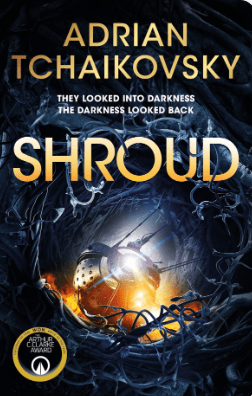
Goodreads 4.22 4,788 ratings / 723 reviews
Quick take: A haunting, slow-burn survival & first-contact sci-fi that pits humanity’s corporate greed and arrogance against an alien ecosystem both beautiful and deadly. Shroud is atmospheric and morally complex, and although its pacing can test patience, it rewards readers who like weirdness, philosophical tension, and unsettling alien otherness.
What works:
- The worldbuilding is vivid and imaginative: the moon “Shroud” is hostile in ways beyond just environment. The flora, fauna, the gravity, the hazards of oxygen exposures, the strange life forms that have very alien ways of communication and cognition—all of it feels weird, coherent, and dangerous.
- The alien perspective isn’t just window dressing; Tchaikovsky gives the Shrouded their own mind(s), perceptual modes, motivations. The alternating outlooks (humans vs. the alien mind) deepen the sense that the human characters are always partially in the dark—not only literally on Shroud but morally and cognitively.
- Survival tension is strong. The human crew’s crash, the limited resources, the corporate machinations, the environmental dangers, and the unknowns about what the being(s) on Shroud want build dread steadily.
- Themes of worth, consumption, and what “contribution vs resource use” means are woven in nicely. The Humanosphere (the broader human civilization) has metrics for “worth,” and those become morally fraught once the characters actually confront the Shroud and the limits of human understanding.
What might not:
- Shroud demands patience. The build can feel slow, especially early on while the corporate mission and character backstories are set up; some readers may find the middle stretched and less immediately gripping.
- Some ambiguity may frustrate. The alien mind(s) are partly mysterious, communication is partial, motivations are opaque at times, which works for mood and theme, but leaves threads that some might wish were more clearly resolved.
- Character depth is uneven. Of the human cast, the leads (e.g. Juna Ceelander and Mai Ste Etienne) are compelling, but some supporting roles feel less distinct or under-explored, making parts of the human side of the story less emotionally anchored.
- High concept + high danger sometimes make the tone heavy. If you prefer lighter sci-fi or more optimistic space adventures, Shroud may feel too dark, too eerie, and too relentless in its exploration of what humans often get wrong.
Vibe & tropes: Xeno-first contact • hostile alien moons • survival under extreme environmental hazard • corporate exploitation versus science wonder • alien intelligence with non-human perception • moral complexity in resource / worth metrics • stranded expedition horror • limited human understanding versus incomprehensible alien mind(s).
Sci-Fi Scale: 🚀🚀🚀🚀 (4/5). Shroud soars in originality of alien biology, in atmosphere, in the way it balances existential dread with biodiversity weirdness. It loses a bit in pacing and in resolution clarity, but those are trade-offs for its ambition and the depth it reaches in its weird, alien heart.
Content notes: This novel includes a range of dangerous and unsettling environmental threats: high gravity, toxic atmospheres, exposure risks, strange biochemistry, and flora/fauna that react in lethal or unpredictable ways. There are physically perilous crashes, injuries, survival under duress, and dread of unseen dangers (monsters in darkness, surprise threats). Also, there’s corporate pressure and ethical conflicts about human exploitation of alien life, which lead to compromise, betrayal, or moral missteps. The mood often dips into existential fear, alienation, and suffering. Violence is present, though much of it has to do with the environment or non-human adversaries rather than graphic human-on-human gore. The tone is adult, often dark, with speculative science, dread, wonder, and moral ambiguity.
Verdict: Shroud is a strong entry in modern first-contact sci-fi. If you like your alien worlds weird, your biological speculation imaginative, and your survival stories with philosophical weight, this is one you’ll dwell on. It’s not flawless—some pacing lulls and ambiguity may not appeal to every reader—but it’s bold, unsettling, and richly textured.
Book Critic Score 4.1/5 stars
As an Amazon Associate I earn from qualifying purchases.
#7 Dissolution by Nicholas Binge
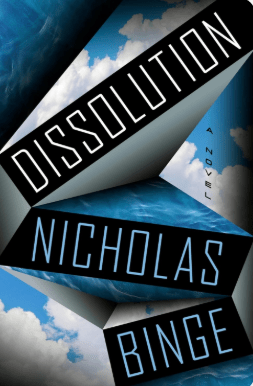
Goodreads 4.03 2,975 ratings / 629 reviews
Quick take: A high-concept sci-fi thriller that pairs memory manipulation, time slips, and deep love between decades-long partners. The story hooks you with its emotional urgency and stakes: what if someone could erase not just your memories, but your very identity—and you had to dive into them to fight back?
What works:
- The premise is strong and emotionally charged. Maggie, in her eighties, caring for a husband believed to have Alzheimer’s, discovers there’s more going on—and that someone is stealing Stanley’s memories to hide something crucial. That immediately raises both personal stakes and broader, existential danger.
- Dual timelines used skillfully. We move between Maggie in the present and Stanley’s past (his youth, how he met Maggie, his own scientific work). These alternating chapters build mystery, character, and backstory with enough tension so neither feels like filler.
- Love & grief as core themes. The pain of watching someone you love lose themselves—or seem to—is compelling. Maggie’s devotion, regret, memories, and the drive to reclaim what’s being lost make the conflict feel deeply human.
- Sci-fi thriller tension done well. There’s a countdown, a clandestine clinic, mysterious technology “memory spade,” and an antagonist whose motives are murky—just enough to keep you guessing. The danger escalates gradually, so when big revelations land, they hit.
What might not:
- Some science-fiction elements are glossed over. Time travel or memory-travel is essential, but not always deeply explained. If you like hard sci-fi with rigorous tech detail, this may frustrate you.
- Pacing dips in the middle. The emotional and memory-sections are strong, but there are quieter stretches where momentum eases before ramping up again. Some readers might feel a lull there.
- Character depth beyond Maggie & Stanley is somewhat uneven. Some secondary figures, like the antagonist Hassan or younger Stanley’s peers, are less fully developed, which reduces some of the tension in those threads.
- Some thematic or cultural elements draw critique. For example, the way aboriginal lore is used felt unnecessary or loosely integrated to some, which may feel like appropriation or shallow referencing.
Vibe & tropes: Memory loss / erasure • time-travel via memories • elderly protagonist • love spanning decades, threatened by science • thriller structure with countdown and mysterious technology • alternate past/present narrative threads • identity & what makes us human • scientific hubris / experiment gone wrong.
Sci-Fi Scale: 🚀🚀🚀🚀 (4/5). Dissolution does a lot right: emotional impact, suspense, inventive ideas. It loses some marks in a few weaker explanations and mid-book pacing, but overall it delivers a compelling, thoughtful ride that lingers after you finish.
Content notes: This book contains themes of memory loss (presented as dementia or Alzheimer’s at first), grief, aging, and the fear of vanishing identity. There are scenes involving experimental technology (memory spade) that allow entering and interacting with Stanley’s memories, including traumatic or painful past events. Some violence or threat emerges, especially when characters interfere with memories—there’s psychological and existential danger more than gore in many cases, though the tech and its effects do lead to unsettling moments. There is also emotional pain, betrayal, and moral ambiguity. The tone stays adult and serious; readers should expect thoughtful but sometimes heavy exploration of memory, loss, and what it means to be oneself.
Verdict: Dissolution is a standout for anyone who loves speculative sci-fi that balances big philosophical stakes with deeply personal ones. Maggie’s journey to save both memory and identity is moving, and the mystery around what really happened in Stanley’s past is satisfying. It may not satisfy readers who want very tight scientific detail or a faster, more action-oriented plot throughout—but for those willing to sit with uncertainty, grappling with grief and love, this is a powerful, evocative read.
Book-Critic Score 4.1/5 stars
As an Amazon Associate I earn from qualifying purchases.
#8 When the Moon Hits Your Eye by John Scalzi
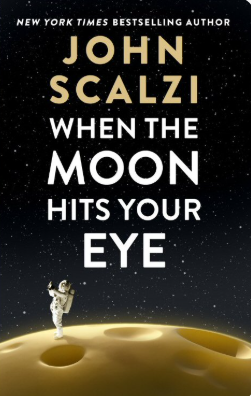
Goodreads 3.81 12,865 ratings / 2,407 reviews
Quick take: An absurd sci-fi satire built on one impossible premise: the moon turns into cheese overnight. Scalzi uses this surreal event not just for laughs, but to explore how people respond to sudden apocalypse — with denial, opportunism, grief, and weird hope. Funny, charming, but also uneven in momentum and emotional payoff.
What works:
- The concept is delightfully ridiculous yet treated with sincerity. The premise itself (the moon becoming a cheese-like substance with the same mass, suddenly transforming moon rocks, etc.) grabs attention and sets up both comedy and existential dread.
- Scalzi’s cast of characters is broad and diverse: scientists, politicians, ordinary people, cheese shop owners, religious people, retirees, etc. The vignette style allows him to show many perspectives of how a society reacts to massive change.
- Humor is sharp. Scalzi leans into puns, absurdity, satirical commentary on bureaucracy, media, human vanity, and political spin.
- Underlying emotional themes show up: grief, mortality, instability, the fragility of our systems when our foundational certainties are upended. Scalzi doesn’t just send people through humor; he shows how such an event shakes them.
What might not:
- The vignette format means many characters only appear briefly, making it hard to deeply care about most of them. There are few anchors to latch onto emotionally.
- Some sections drag: when the novelty of the concept wears off, the momentum slows, especially in the middle. The book cycles through reaction after reaction, which becomes repetitive.
- Humor and earnestness sometimes clash: moments of genuine emotional weight are occasionally undercut by jokes or satirical twists, which can lessen their impact.
- The explanation (or lack thereof) of why the moon changed is never explored. For some readers that’s fine—it keeps focus on people—but for others who like more speculative detail or worldbuilding depth, the mystery of the transformation may feel frustratingly unresolved.
Vibe & tropes: Apocalyptic satire • high-concept catastrophe • “everyone reacts differently” structure • vignettes of ordinary lives • absurd premise meets serious stakes • media / political spin in disaster • cosmic weirdness • existential comedy • human resilience in the face of the impossible.
Sci-Fi Scale: 🚀🚀🚀 (3/5). The charm, humor, and premise are strong, and Scalzi makes the world responses engaging. But its uneven pacing, many shallow character arcs, and comedic shifts undercut how deeply the novel can hit. It’s fun, interesting, and occasionally moving—but not consistently powerful.
Content notes: This book includes global reaction to a catastrophic (though strangely whimsical) cosmological change. There is panic, scientific uncertainty, political spin, media sensationalism, religious reaction, and emotional trauma. Some death and danger emerge as the situation escalates (including a moon fragment or threat to Earth). While not heavily graphic, there are scenes of loss, fear, disruption, and existential dread. The tone moves between comedic absurdity and serious reflection, so readers should expect both laughs and unsettling moments. There is occasional strong language, and some depictions of human vulnerability and grief.
Verdict: When the Moon Hits Your Eye will be a hit for readers who enjoy standout, absurd premises and don’t demand tight plot mechanics. Scalzi delivers satire, humor, and enough emotional truth to make the cheese-moon situation feel like more than just a joke. It doesn’t always sustain its weight—some threads feel light or undercooked—but it offers a reward if you enjoy speculative “what if” stories that examine human nature in crisis.
Book-Critic Score 3.8/5
As an Amazon Associate I earn from qualifying purchases.
#9 All the Water in the World by Eiren Caffall
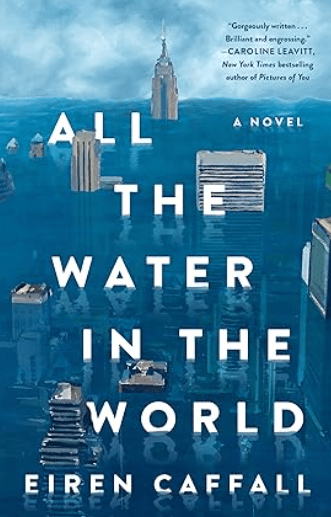
Goodreads 3.58 8,368 ratings/ 1,891 reviews
Quick take: A poetic climate-fiction novel that pairs sweeping environmental collapse with intimate character moments. Through young Nonie’s eyes, Eiren Caffall builds a flooded, dangerous world—one that’s beautiful, terrifying, and heartbreakingly human.
What works:
- The setting and premise are vivid and emotionally resonant. The flooding of New York, with the roof of the American Museum of Natural History becomes both home and mission, is a powerful image. It grounds big loss in familiar places.
- Nonie as narrator is compelling. Her connection to water, her observations of storms and drowned monuments, her perspective as someone growing up in the new “World As It Is” give both wonder and dread.
- The balance between survival journey and preservation of history is elegantly done. The characters aren’t just fleeing disaster—they’re trying to save records, meaning, culture, what science and art have preserved. That adds depth beyond mere catastrophe.
- Emotional themes—grief, hope, disruption, loss—are handled with care. Caffall doesn’t shy away from the difficulty of adapting, of seeing what’s gone, and feeling the weight of what must be preserved. That sense of responsibility toward what is lost adds moral weight to the plot.
What might not:
- Some pace slows, especially during more reflective or descriptive chapters. When the novel pauses to meditate on water, loss, or memory, momentum can dip. If you prefer nonstop action, those slower currents might feel draggy.
- Nonie’s tone is often reserved, sometimes emotionally distant. For some readers this distance works (adds realism, especially given trauma), but others might find it harder to connect deeply.
- The journey and the environmental horrors are powerful, but some world-building around the flooded future (how various survivor communities operate, governance, commerce) is hinted at more than fully explored. There are moments when the implications of climate collapse feel less fleshed than the emotional landscape.
Vibe & tropes: Climate/post-apocalyptic speculative fiction • journey through disaster • young narrator growing up in a changed world • nature’s power and beauty contrasted with its destruction • preservation of history • found family/survivor communities • loss, memory, quiet resilience • storms as both threat and character.
Sci-Fi Scale: 🚀🚀🚀 (3.5/5). All the Water in the World impresses with its emotional depth, its imaginative worldbuilding, and its ability to make climate catastrophe feel immediate and personal. It doesn’t get perfect marks because the pacing and world detail waver some, but overall it’s a strong, stirring, thoughtful read.
Content notes: The book contains intense environmental disaster: hypercanes, massive flooding, climate devastation, and depopulation. Characters are often in peril from storms, deteriorating infrastructure, lack of safe water, disease risks, and displacement. There are scenes of danger rather than gore, and much of the emotional weight comes from witnessing loss—of people, homes, past ways of life. Nonie’s perspective includes trauma, grief, and the psychological effects of living in a constantly threatened world. Some communities encountered are hostile, highlighting human conflict, scarcity, and moral compromise under duress. The tone remains speculative, sometimes lyrical, often quiet, even in its moments of high stress.
Verdict: All the Water in the World is a beautiful, haunting work of climate fiction—one that reminds us what we might lose, what we might have to preserve, and what it means to live in a world reshaped by water. If you like speculative fiction that is both imaginative and emotionally rich, this is a rewarding read. It may not always deliver high-octane thrills, but its power lies in reflection, resistance, and hope.
Book-Critic Score 4.0/5
As an Amazon Associate I earn from qualifying purchases.
#10 The Third Rule of Time Travel by Philip Fracassi
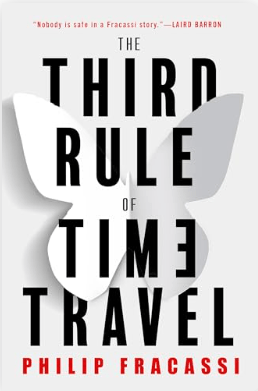
Goodreads 3.64 3,750 ratings / 852 reviews
Quick take: A thoughtful sci-fi thriller where time travel is bounded by rules so strict they feel both like protection and prison. Fracassi builds tension with grief, consequence, and moral quandaries more than flashy paradoxes. It’s emotionally driven, somewhat restrained in its science, but compelling in its core.
What works:
- The rules of time travel are well-defined and meaningful. The constraints—only within your lifetime, only 90 seconds, only observation—mean every time Beth uses the machine, there’s risk, both personal and moral. The restrictions heighten the stakes and keep the consequences believable.
- Emotional weight & character motivation. Beth’s grief over her husband’s death, her commitment to her daughter Isabella, and her drive to carry on the project create sympathetic tension. She isn’t some infallible scientist; her decisions are messy, human.
- The slow build and mystery around what “viewing” those past moments will do. The way small distortions and warps creep in makes the reader anxious — when does observing become interfering? When does curiosity become danger?
- Accessible writing. Fracassi introduces just enough sci-fi concepts to give weight without drowning in jargon. The story keeps moving, and emotional resonance balances speculative ideas.
What might not:
- Scientific under-explainedness. While the time-travel rules are fascinating, some parts feel like they lean on the “magic of grief” more than the mechanics. If you like hard sci-fi with technical grounding, things here may feel a little loose.
- Supporting characters are less fleshed out. Beth carries most of the emotional load, which works well, but some secondary characters (colleagues, antagonists) feel flat or overly defined by their roles rather than personalities.
- Pacing can lag early. The midsection has quieter moments, emotional looping, and some details that slow the mystery’s momentum before it ramps up. If you want nonstop tension, the beginning requires patience.
- The “reveal” structure includes some exposition late in the book that feels like catching up rather than uncovering; some plot threads are wrapped quickly in the end, which may feel tidy but slightly abrupt.
Vibe & tropes:
Time travel ethics • observer vs. actor in time • grief & loss driving technology • scientist protagonist with personal stakes • corporate / funding pressure • memory and trauma • reality warping subtly • “you can’t change the past—but watching may still hurt” motif.
Sci-Fi Scale: 🚀🚀🚀 (3/5). The Third Rule of Time Travel scores high for its fresh take on time travel limitations, emotional depth, and moral tension. It doesn’t quite reach maximum due to some pacing lulls and less consistent character depth, but it delivers a strong, satisfying journey.
Content notes: This novel dives into grief in a serious way: Beth’s loss of her husband, her guilt, and her attempts to preserve memory are central. There are disturbing moments involving observing traumatic past events, including deaths, accidents, loss of family members. Psychological distress is frequent—Beth’s emotional strain, isolation, and internal conflict. There are scenes that refer to trauma, perhaps PTSD-like responses, and some corporate/ethical pressure that causes mental stress. The time travel device introduces reality warping: characters sometimes see or perceive things that may or may not “belong,” which can be disorienting. Violence is mostly not graphic in the present, but the book doesn’t hide past events or their emotional brutality. The tone is serious, melancholic, and speculative rather than action-packed or horror-heavy.
Verdict: The Third Rule of Time Travel is ideal for readers who like contemplative sci-fi grounded in human emotion rather than plot gymnastics. It asks what observing the past costs in memory, identity, and grief. While it isn’t perfect—some areas feel less polished, and if you want hard science you may desire more—it succeeds at being thought-provoking, immersive, and emotionally resonant.
Book-Critic Score 3.9/5
As an Amazon Associate I earn from qualifying purchases.
 book-critic.com