
Top 10 Best Selling Self-Help Books:
#1 It Begins With You: The 9 Hard Truths About Love That Will Change Your Life by Jillian Turecki
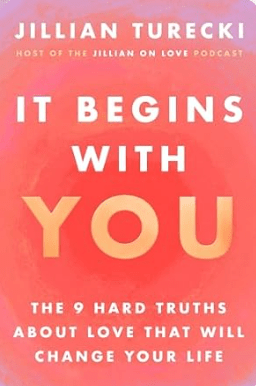
Goodreads 4.34 4,255 ratings / 368 reviews
Quick take: A compassionate yet challenging guide that argues lasting, fulfilling relationships begin with self-work. Turecki lays out nine truths about love—some that comfort, many that confront—with the goal of helping readers heal patterns, build confidence, and show up more authentically in their relationships. It’s earnest, useful, though at times repetitive.
What works:
- Turecki’s central message—that our romantic partnerships often mirror our relationship with ourselves—offers a powerful reframing. She encourages readers to look inward first, which gives many commonly assumed relationship issues a fresh lens.
- The structure of nine “hard truths” gives clarity and digestible segments: topics like self-worth, speaking truth, love vs lust, making peace with parents feel targeted. It helps the reader follow a clear path.
- Practical tools, case studies, and guiding questions are a strong asset: Turecki draws on her experience as a relationship coach, and she includes somatic practices and strategies that feel doable.
- The tone balances care and accountability. She isn’t sugarcoating: some truths are uncomfortable, but she delivers them with empathy and encouragement rather than shame.
What might not:
- The book tends to restate its core ideas in multiple ways, which gives reinforcement, but also makes parts feel repetitive. For readers pressed for time or used to tight self-help styles, some chapters may seem overlapping.
- Because the truths are fairly universal, for some readers the insights may feel familiar. If you’ve read many relationship or self-esteem books, there may be fewer surprises.
- Some advice assumes certain privileges: emotional safety, time, resources, capacity to reflect. Not all readers may find every suggested practice feasible in their life circumstances.
- Occasional lack of depth in supporting context: while many “truths” are backed with examples, some psychological or cultural complexities (e.g. intersections with identity, trauma) are hinted at rather than explored in full.
Vibe & tropes: Self-help with emotional accountability • truths you probably already sense but avoid facing • introspection & self-worth • love vs lust clarification • doing inner work before seeking love externally • making peace with family history • speaking up, boundaries, self-respect.
Self-Help Scale: 🌿🌿🌿🌿 (4.5/5). The book delivers strong value: clarity, compassion, structure, and useful practices. It doesn’t hit the maximum for me only because of its repetition and because some chapters feel more motivational than practical for all readers, depending on your situation.
Content notes: Nonfiction self-help focused on love, self-acceptance, relationship dynamics. Topics include emotional vulnerability, desire vs lust, self-worth, boundaries, family relationships (making peace with parents), shame, fear, speaking truth. There are no graphic or disturbing violent scenes; the hardship comes from emotional pain, relational conflict, past wounds, and internal struggle. Readers dealing with trauma or relationship loss may find certain sections emotionally intense or triggering, especially when discussing parental influence or self-worth.
Verdict: It Begins with You is a worthwhile read for anyone who wants to rework the foundation of their relationships—starting from themselves. It may not revolutionize every aspect of relationship advice, but it solidifies what many people intuitively feel but struggle to act on: that healing and authenticity inside are the prerequisites for love outside. If you’re searching for guidance to root out limiting beliefs, speak up more, and let your relationships reflect better versions of yourself, this book offers a solid roadmap.
Book-Critic Score: 4.6/5
As an Amazon Associate I earn from qualifying purchases.
#2 Letting Go: The Pathway To Surrender by David R. Hawkins
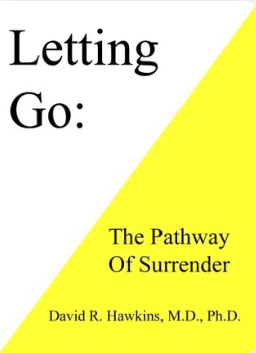
Goodreads 4..08 21,015 ratings / 2,077 reviews
Quick take: A spiritual-self-help classic offering a roadmap to release emotional burdens through surrender. Hawkins argues that many of our mental obstacles—grief, anger, guilt, pride—can be dissolved by letting go of resistance rather than arguing with thoughts or trying to fix the past. Inspiring, earnest, though it walks a fine line with ideas some may find less scientifically grounded.
What works:
- The concept of surrender as a tool to release negative emotions is easy to grasp, and Hawkins lays out a methodical way of identifying suppressed feelings (shame, guilt, fear, etc.) and moving through them. It gives readers a sense they can act on their emotional weight.
- His mixture of spiritual insight, anecdote, and clinical experience (he was a psychiatrist) gives the book credibility for readers seeking both inner growth and emotional healing.
- Chapters organized by distinct emotions make the book easier to navigate; if a reader is struggling with “anger,” “pride,” or “grief,” they can go directly to that section. Hawkins also frequently returns to “letting go” as a skill rather than a one-time fix.
- The voice is encouraging and compassionate. Many readers report “light-bulb moments” when a principle crystallizes what they’ve felt but couldn’t articulate. The idea that avoiding or repressing feelings keeps us stuck is powerful.
What might not:
- Some of Hawkins’s claims rely on what many consider spiritual or metaphysical frameworks (frequencies of emotion, emotional “energy” vibration) that are not empirically validated. Readers looking for rigorous psychological science may find these sections troublesome.
- The approach can feel simplistic in places. The mechanism of letting go is repeated often, and for some, this repetition feels more motivational than transformative if deeper issues are unresolved.
- Some readers may struggle with the emotional intensity. Facing suppressed emotions, especially heavy ones like grief or shame, can feel overwhelming without support. The text sometimes assumes readers are ready to confront deep resistance.
- There is a strong spiritual overtone, which may not align with all belief systems. Also, certain metaphysical or healing claims (e.g. about illness or wellbeing) are presented in ways that some readers might find credulous or uncritically optimistic.
Vibe & tropes: Spiritual self-help • letting go / surrender • emotional release • consciousness / frequency hierarchies • inner healing • overcoming resistance • facing suppressed emotions • grief, guilt, pride, fear journeys • transformation through acceptance.
Self-Help Scale: 🌿🌿🌿 (3/5). Letting Go offers compelling insights and tools, especially if you already lean toward spiritual growth. It’s inspiring and often helpful for emotional awareness and relief. But it doesn’t score higher because of its less rigorous grounding in empirical science and the potential for its approach to feel too general or idealistic for those dealing with deeper trauma or needing professional mental-health support.
Content notes: The book deals with many strong emotional themes: shame, guilt, grief, fear, apathy, pride. It asks readers to confront suppressed or avoided feelings—so there are sections that may stir up emotional pain. There are spiritual/spiritual healing references, including ideas of “vibration,” consciousness levels, forgiveness, surrender that may conflict with more secular or scientific perspectives. There are no narratives of explicit physical violence or sexual content; the intensity is emotional, not graphic. Readers sensitive to emotional distress may want to read with care or support.
Verdict: Letting Go: The Pathway to Surrender is a powerful book for readers ready to lean into emotional honesty, spiritual surrender, and inner transformation. If you are someone who feels stuck, carrying unresolved emotions, this book can offer release and relief. But it’s not a substitute for therapy, nor is it fully anchored in scientific psychology; its metaphysical aspects and spiritual framing are both its strength and potential limitation depending on what you believe or need.
Book-Critic Score 3.7/5
As an Amazon Associate I earn from qualifying purchases.
#3 The Let Them Theory by Mel Robbins

Goodreads 4.09 181,987 ratings / 18,042 reviews
Quick take: A clean, powerful mental shift book that urges us to stop trying to control the actions, opinions, or reactions of others—and focus instead on what we can control. The Let Them Theory delivers a mindset that’s easy to understand, emotionally accessible, and especially helpful if people-pleasing or burnout are wearing you down.
What works:
- Clear, memorable premise. The two parts, “Let Them” and “Let Me,” are simple enough to stick with you. Robbins argues you don’t have to fix or control others; you can shift your energy instead toward your own boundaries, choices, and peace.
- Relatable voice and stories. Robbins mixes personal anecdotes, everyday examples, and research in a way that feels like advice from a friend rather than preachy instruction. That tone helps the ideas hit without feeling overwhelming.
- Actionable mindset tools. It’s less about giving dozens of techniques and more about helping you lean into a mindset: noticing when you’re trying to control, pausing, choosing your response. For many readers, that can already feel transformative.
What might not:
- Repetition. Some readers may feel the book stretches a fairly straightforward idea over too many pages; parts of the book circle back to the same examples or rephrase the same core message.
- Limited depth in some areas. For more complex situations—long-term relationships, trauma, systemic or abuse contexts—the guidance is lighter. The “Let Them” message can feel insufficient when people are in situations where the consequences of letting go are more serious.
- Privileged assumptions. Some advice implies you have freedom, resources, or safety to make certain choices (setting boundaries, saying “no,” walking away). For readers in more constrained situations, parts of the message may feel aspirational but hard to apply.
Vibe & tropes: Modern self-help • letting go of control • boundary setting • people-pleasing recovery • emotional liberation • mindset shift • “you can’t control what others do, only what you do” • accountability vs apathy.
Self-Help Scale: 🌿🌿🌿🌿 (4 / 5). The book delivers a strong, usable message, especially for emotional autonomy and reducing mental burden. It doesn’t quite hit the top score for me only because in tougher relational or systemic settings, it feels less fully equipped. But overall, it’s one of the more practical mindset books released recently.
Content notes: This is a nonfiction self-help book. The emotional content deals with stress, burnout, anxiety, opinion pressures, comparison, guilt, people-pleasing, family / relationship conflict, and shame. Robbins uses personal examples and stories; parts of the book may trigger or feel intense for people dealing with trauma, abuse, or mental health challenges. There is no graphic violence or sexual content; no speculative or sci-fi scenes. The content is motivational and reflective, not narrative-driven.
Verdict: The Let Them Theory is a strong read if you are tired of carrying the weight of others’ expectations, reactions, or judgments. It offers a mindset that can clear mental space, reduce reactivity, and help you live more authentically. If you’re looking for deeper psychological theory or strategies for very high stakes or dangerous relational dynamics, you’ll want to supplement this. But for everyday peace, boundary work, and freeing yourself from controlling what you can’t, this is a book you’ll return to.
Book-Critic Score 4.5/5 stars.
As an Amazon Associate I earn from qualifying purchases.
#4 Reset: How to Change What’s Not Working by Dan Heath

Goodreads 4.16 1,894 ratings / 204 reviews
Quick take: A practical, inspirational guide for getting unstuck—whether in work, personal life, or community—and making meaningful, sustainable change without overhauling everything. Dan Heath argues that the key isn’t to do more, but to do better: to find leverage points and restack resources so small shifts lead to big results.
What works:
- Heath provides a clear framework: “Find Leverage Points” and “Restack Resources” offer two pillars for change that feel actionable and grounded.
- Real-world stories and case studies. Examples drawn from varied settings (businesses, nonprofits, public services) make the ideas vivid, showing both wins and challenges.
- Useful tools & checklists. Heath gives readers chapter summaries, diagnostic questions, and suggestions that help translate concepts into practice.
- The writing style is approachable and often witty rather than dry. Heath balances optimism with realism, acknowledging resistance, incremental struggle, and the messiness of real life.
What might not:
- Some readers may feel parts of the advice are obvious or familiar—if you’ve read lots of change-management or productivity/self-help books, you’ll recognize many ideas.
- Limited depth in some contexts. The structural, personal, or systemic barriers people face (e.g. organizational inertia, institutional bias, mental health constraints) sometimes feel under-explored compared to the tactical tips.
- The middle section of the book can drag: after initial momentum, some chapters spend more time exploring examples or elaborating frameworks than pushing forward with fresh insight or new tools.
- Scaling issues: Some leverage points or “restacking” strategies may work well in small teams or individual life changes, but are harder when applied in large organizations, across entrenched systems, or where resource constraints are severe.
Vibe & tropes:
Change-management meets self-help • getting unstuck • leverage points / small wins • restacking / reallocating resources • systems thinking applied to everyday problems • diagnostic tools & checklists • optimism balanced with resistance • “do less, do better” mindset • leadership at any level.
Self-Help Scale: 🌿🌿🌿🌿 (4 / 5). Reset delivers many things well: clarity, actionable ideas, a sense of possibility. It doesn’t score full marks for me only because some insights felt familiar, and certain suggestions assume a favorable context of resources, authority, or organizational structures.
Content notes: This book is nonfiction / self-help. There is no fictional narrative, violence, or speculative sci-fi content. The content deals with professional and personal change: feeling stuck, wanting improvement, encountering resistance. Examples include process inefficiencies, organizational change, burnout, frustration with status quo, lack of progress. There is emotional content—frustration, disappointment, ambition—but nothing graphic. The material is generally safe, motivational, and focused on growth.
Verdict: If you’re someone who’s felt stuck—at work, in a project, or personally—and want a pragmatic set of tools rather than vague encouragement, Reset is highly recommended. It’s especially useful for managers, leaders, or anyone trying to improve systems or habits. For those looking for radical transformation, deep psychological unpacking, or structural critique of institutional power, this book is a strong launchpad, but likely not the alone answer.
Book-Critic Score 4.4/5 stars.
As an Amazon Associate I earn from qualifying purchases.
#5 Secrets of Adulthood: Simple Truths for Our Complex Lives by Gretchen Rubin

Goodreads 3.39 2,631 ratings / 445 reviews
Quick take: A short, sweet collection of aphorisms and life reminders, Secrets of Adulthood distills Rubin’s decades of writing & research into bite-sized truths. It won’t overhaul your life overnight, but it offers just enough insight to pause, reflect, and maybe adjust a pattern or two.
What works:
- The format is very approachable. Because Rubin organizes the book into thematic sections (e.g. Cultivating Ourselves, Faces of Relationships, Making Things Happen, Life’s Dilemmas), you can dip in nearly anywhere and still get meaningful advice.
- The aphorisms are often sharp, relatable, and memorable. Many of her one-liners (“Nothing is more exhausting than the task that’s never started,” “Do you need more time, or do you need to make a decision?”) capture feelings people already have but haven’t quite articulated.
- It’s light & gentle. This isn’t a heavy self-help manual full of long exercises or emotionally wrenching stories—it’s more like a companion piece you keep nearby for occasional light reflection.
- Good gift-book potential. Because of its brevity and polish, it works well for recent grads, life transitions, or as something to give people entering new chapters. It offers morsels of wisdom rather than demands.
What might not:
- It can feel thin. Because much of the book is aphorism rather than deep narrative or case studies, some readers may expect more depth, more “why this matters,” or more concrete guidance.
- Repetition vs originality. Some aphorisms feel familiar or echo Rubin’s previous work; for long‐time fans it may feel like re-visiting territory rather than new insight.
- Limited tools. If you’re looking for step-by-step change, behavior experiments, or deep emotional work, this isn’t the book for that. It’s more about small nudges, reminders, wisdom storage than transformation.
- Subjectivity in resonance. As with most aphorisms, what lands for one person may feel cliché or obvious to another. If the style doesn’t speak to someone, the impact will be lighter.
Vibe & tropes: Quick wisdom • life aphorisms • maturity without mania • gentle self-help • reminders over reinvention • wisdom for everyday adulthood • being real about relationships and time • navigating life’s complexity via small truths.
Self-Help Scale: 🌿🌿🌿 (3.5 / 5). The book earns points for readability, warmth, and making life truths feel approachable. I dock part of the score because it’s more reminder than guide, more “pause & think” than “do this and fix that.”
Content notes: This is nonfiction self-help. Rubin’s content is clean in terms of physical or graphic detail—there is no violence, sex, or mature themes in that sense. But there are emotional themes: regret, procrastination, decision anxiety, relationship challenges, caring about others’ opinions, acknowledging one’s own shortcomings. The emotional tone is gentle; nothing overly triggering, though some aphorisms may hit hard if the reader is in a period of self-doubt or transition.
Verdict: Secrets of Adulthood won’t revolutionize your life, but it doesn’t aim to. Its strength is in compiling simple truths into a polished, comforting little volume that you return to when you need a nudge. If you appreciate brief wisdom, quotable life lessons, and reminders to check in with yourself, this is a solid pick. For readers wanting deeper work or highly structured change, this is a companion more than a blueprint.
Book-Critic Score 3.9/5 stars.
As an Amazon Associate I earn from qualifying purchases.
#6 How to Be Enough: Self-Acceptance for Self-Critics and Perfectionists by Ellen Hendriksen
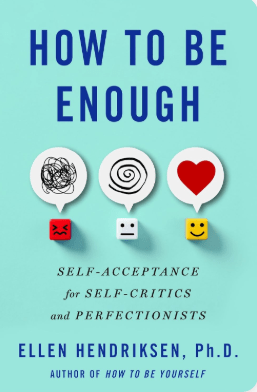
Goodreads 4.1 834 ratings / 175 reviews
Quick take: A wise, empathetic guide for anyone who’s ever felt “not enough” despite accomplishments. Ellen Hendriksen blends psychological science, practical advice, and kindness to help self-critics and perfectionists shift their mindset without giving up excellence. It’s encouraging, insightful, and feels like a roadmap rather than just pep-talk.
What works:
- Hendriksen clearly illuminates how self-criticism and perfectionism trap people in endless cycles of striving and dissatisfaction. Her explanations of the “inner critic” are accessible and well grounded in both research and clinical experience.
- The “seven shifts” she proposes (from Self-Criticism → Kindness; Rules → Flexibility; Mistakes → Letting Go; etc.) are concrete and actionable. Each shift gives readers tools and small changes they can begin practicing immediately.
- Stories, case studies, and real-life examples make the advice feel lived in. Hendriksen doesn’t just present theory—she uses patient stories and anecdotes that help you see the advice in motion.
- Tone is compassionate but not coddling. She acknowledges how hard it is to live with perfectionism, how painful self-criticism can be, and offers permission to be human, to fail, to rest—all while maintaining dignity and aspiration.
What might not:
- Some sections repeat themes. Because the core issue (feeling not good enough) is revisited in various ways, parts of the book retread very similar ground. For some readers, this may feel redundant.
- The suggestions are strong, but not all will be equally accessible. Folks with severe anxiety, past trauma, or limited psychological support may find certain shifts more difficult to implement without help.
- “Perfectionism” as a trait is broad, and while Hendriksen differentiates types and experiences, some readers may feel their specific variant of perfectionism isn’t fully addressed.
- Cultural, socioeconomic, or systemic factors that make “being enough” more difficult (bias, discrimination, privilege gaps) are touched upon but not deeply explored. For readers wanting a more intersectional lens, this may feel partial.
Vibe & tropes: Mindful self-help • kindness vs self-criticism • high standards / self-expectations • personal growth • inner critic work • letting go of rigid rules • embracing mistakes • comparison & contentment • authenticity over image.
Self-Help Scale: 🌿🌿🌿🌿 (4 / 5). The book earns high marks for clarity, warmth, and practical shifts. It doesn’t get full marks only because its reach may be uneven depending on the reader’s emotional resources, and some sections feel more motivational than deeply transformative for those facing heavy internal struggles.
Content notes: This is nonfiction, psychological/self-help. Content covers self-criticism, shame, anxiety, comparisons with others, perfectionism, guilt over “not doing enough,” fear of mistakes. While there is no graphic violence or speculative/fantasy content, emotional intensity is real; certain stories or exercises may bring up painful memories or feelings. There are no sexual or explicit scenes; maturity is emotional rather than physical. The tone is safe, supportive, and intended to guide, but readers who are in crisis or deeply traumatized may prefer to approach with support.
Verdict: How to Be Enough is a strong and compassionate guide for anyone caught in the perfectionism trap. Hendriksen doesn’t promise overnight transformation, but offers a realistic, kind, and well-informed path toward self-acceptance. If you’re tired of always pushing, comparing, or beating yourself up—even when everything goes “right”—this book is likely to give you both relief and tools.
Book Critic Score 4.3/5 stars
As an Amazon Associate I earn from qualifying purchases.
#7 Beyond Anxiety: Curiosity, Creativity, and Finding Your Life’s Purpose by Martha N. Beck
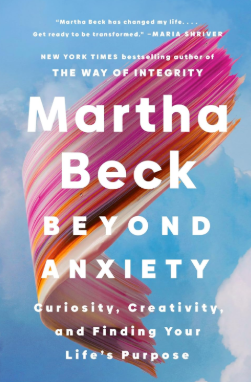
Goodreads 3.99 2,000 ratings / 220 reviews
Quick take: A heartfelt, insightful guide that reframes anxiety not just as something to manage, but as a cue toward creativity and meaning. Martha Beck offers both empathy and tools, inviting readers to shift from fearful overthinking to a more curious, creative inner life. It’s inspirational, with moments of deep reflection—but some parts will feel more aspirational than immediately actionable.
What works:
- Beck’s premise is strong: she argues that anxiety often spirals under modern pressures—and instead of merely damping it down, we can replace that spiral with a “creativity spiral.” That framing gives anxiety new purpose rather than just seeing it as a flaw.
- Her voice is warm, accessible, and often witty. She doesn’t come across as distant or overly academic; her stories, metaphors, and examples make the concepts feel human and grounded.
- Practical structure: the book guides the reader through calming the nervous / anxiety responses, embracing curiosity / creativity, then integrating those changes into a more meaningful life. There are exercises and reflections that help make the journey not just theoretical.
- Cultural critique and broader context: Beck doesn’t just talk about individual psychology; she includes how society, productivity culture, fear-driven norms all amplify anxiety. That broader lens makes the book feel more than just personal self-help—it has a social resonance.
What might not:
- Some scientific or psychological claims lean metaphorical rather than backed by rigorous studies. For readers who expect strong empirical support or “proof,” certain parts may feel light.
- The reframing from anxiety spiral → creativity spiral is powerful, but isn’t always easy in practice—especially for those in situations of chronic stress, trauma, or mental health conditions. Some of the tools require emotional energy that might feel overwhelming at first.
- Repetition in themes. Because the book circles around anxiety, creativity, meaning quite a bit, some readers may feel certain concepts are revisited without new depth.
- Aspirational tone: Beck often speaks to what’s possible and ideal. For readers who need concrete, short-term coping tools or who are in crisis, some of the “big picture” parts may feel lofty.
Vibe & tropes: Empowerment self-help • reframing fear • curiosity over control • left-brain vs right-brain thinking metaphor • creativity as healing • life purpose • slowing down vs productivity culture • mindful attention to inner world • metaphorical / poetic lens on anxiety.
Self-Help Scale: 🌿🌿🌿(3.5/5). Beck delivers a strong blend of inspiration, insight, and meaningful shifts in how you might relate to anxiety. It earns high marks for vision and approach. It doesn’t get full marks for everyone because some recommendations are better suited to those with stability or privilege, and not every strategy will feel doable immediately.
Content notes: This book deals with emotional material: anxiety, fear, shame, grief, longing, restlessness. There are stories of people dealing with societal pressures, internal worry, overthinking. Beck also delves into how cultural expectations (productivity, perfectionism) and external pressures contribute to emotional pain. There are no graphic or violent scenes; the content is psychological and emotional. Some sections may be triggering for readers sensitive to anxiety disorders, trauma, or those in high-stress or precarious life situations. The tone is hopeful, reflective, and caring, even when the topics are heavy.
Verdict: Beyond Anxiety is a compelling call to stop fighting with anxiety and start listening to it—using it as a signal toward creativity, curiosity, and meaningful living. If you’re someone who lives with worry, or feels stuck even when you’re “successful,” this book has a lot to offer: new metaphors, tools, and a more compassionate way forward. It’s not a quick fix, but its invitation to shift perspective makes it deeply worthwhile.
Book-Critic Score 3.9/5 stars
As an Amazon Associate I earn from qualifying purchases.
#8 Who Better Than You?: The Art of Healthy Arrogance & Dreaming Big by Will Packer

Goodreads 4.09 419 ratings / 75 reviews
Quick take: A bold, motivational self-help memoir-style guide from Hollywood producer Will Packer, Who Better Than You? blends confidence, storytelling, and mindset coaching. It pushes the idea that success begins with a kind of “healthy arrogance” and gives both inspiration and actionable lessons—especially useful for anyone building a career, pivoting paths, or struggling to believe in their own potential.
What works:
- Authentic storytelling & Hollywood insight. Packer draws on his rise—from selling micro-budget films in college to producing blockbuster movies—to catalyze his lessons. These real-world stories (of failure, risk, loud wins, and quiet persistence) give credibility and make the advice feel earned.
- Framing “arrogance” as a tool, not a flaw. The idea of “healthy arrogance” is provocative. Packer reframes confidence, vision, and self-belief as assets you cultivate rather than vices to suppress. That can be empowering, particularly for those held back by self-doubt or lacking visible role models.
- Actionable mindset lessons & encouragement. The book mixes inspiration with practical takeaways: how to convene audacious goals, stay consistent even when no one’s watching, guard your vision, and navigate setbacks without losing yourself. Packer’s voice as mentor shines.
- Energetic and engaging voice. The author’s confidence, humor, and personal reflections keep the tone dynamic. The chapters read easily; many lessons feel like conversations. For many readers, that makes the book inspiring rather than preachy.
What might not:
- “Arrogance” can feel uncomfortable to some. For readers who dislike confidence framing or who see arrogance as negative, the idea may feel like self-justification rather than growth. It demands accepting that discomfort.
- Practicality vs reality gap. Some advice assumes access to resources, networks, or safety nets—things not everyone has. For many, life circumstances make risk harder, and some suggestions might feel aspirational rather than fully doable.
- Familiar tropes / self-help patterns. Many motivational books make similar points (grit, vision, persistence, self-belief). If you’ve read deeply in this space, parts may feel less novel.
- Less depth on structural obstacles. There’s strong personal responsibility messaging, but for readers who want more attention on systemic barriers (bias, exclusion, privilege), the balance may feel tilted toward personal mindset rather than societal change.
Vibe & tropes: Success memoir • confidence mindset • risk-taking in career • vision & clarity • self-belief over self-doubt • working when unseen • belief in one’s worth • mentorship through story • refusing to shrink your goals.
Self-Help Scale: 🌿🌿🌿🌿 (4 / 5). Who Better Than You? succeeds at igniting possibility and giving practical confidence tools. It doesn’t get full marks because some parts require privileges or supports many don’t have, and certain lessons echo familiar self-help threads. But for many readers, it’s powerful and motivating.
Content notes: This is a nonfiction self-help / motivational guide. There’s no fictional violence or speculative content. The book discusses professional setbacks, personal doubt, perseverance under pressure, working through failure, and taking courageous steps even when uncertain. Packer reflects on personal stories, including early struggles, risk, rejection, and navigating tough industry obstacles. Some language is strong; some stories may be uncomfortable if you have imposter syndrome or strong self-doubt. The content is emotionally charged rather than graphically challenging.
Verdict: Who Better Than You? is a strong read for anyone craving encouragement, a boost in self-belief, or a roadmap for pursuing big dreams with confidence. If you’re at a crossroads—career change, creative venture, leadership leap—or just need someone to remind you that you deserve success, this book delivers. If you’re more skeptical of “mindset” work or want strategies strongly grounded in structural reform, you might need to supplement it.ic intensity and moral ambiguity. A strong pick for readers who want their Mulan-style tales with grit and shadows.
Book-Critic Score 4.0/5
As an Amazon Associate I earn from qualifying purchases.
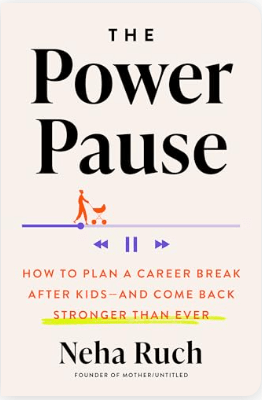
#9 The Power Pause: How to Plan a Career Break After Kids—and Come Back Stronger Than Ever by Neha Ruch
Goodreads 4.23 1,041 ratings / 123 reviews
Quick take: An encouraging, well-researched guide for parents (especially mothers) who are considering a career break after having kids, or already in one, and want to make it intentional rather than just reactive. The Power Pause reframes “pausing” as a strategic phase of growth, identity work, and return — not something to apologize for.
What works:
- Ruch’s framing of the pause as choice and power, rather than failure or shame, is refreshing. She pushes back against cultural expectations, stereotypes, and internalized pressure, giving readers permission to rethink what ambition looks like when motherhood is part of the equation.
- Practical tools and structure: the book walks through preparing for the pause (finances, identity, values), how to use the pause meaningfully (goal-setting, exploring self beyond job titles), and how to return in a way that feels confident. These “Power Practices” at the end of chapters are especially useful for readers who want a roadmap.
- Strong use of stories and community: real stories from moms in different situations + data from Ruch’s AMP survey provide both relatability and credibility. Readers see people like them and feel less alone in guilt, anxiety, or uncertainty.
- Tone & voice: encouraging without being saccharine, honest about difficulties without being disempowering. The writing feels like talking with a knowledgeable friend who understands both ambition and parenthood.
What might not:
- The focus is somewhat niche. While many of the lessons are broadly useful to people doing career shifts of many kinds, the book is primarily aimed at mothers and parents, and those entering or returning from pauses in their careers. If someone is looking for very general career advice, or never had children, parts may feel less relevant.
- Some of the ideas are familiar. There’s overlap with existing literature about work-life balance, motherhood, identity, and “leaning out,” so readers well-read in this genre may find fewer surprises.
- Financial & structural constraints may limit applicability. Not everyone has “privilege” (time, partner support, savings, flexibility) to plan a power pause in the ideal way described. While Ruch acknowledges this, the practical barriers for many can still feel steep.
- Uplift vs realism trade-off: Sometimes the emphasis is hopeful or motivational in ways that could gloss over how hard some returns are (bias, gaps in resume, mental/emotional labor). Some readers may want more concrete strategies for those tougher realities.
Vibe & tropes: Parenthood & identity • ambitious working moms • career break / sabbatical after kids • values & identity work • “Finding yourself outside your title” • societal expectations & shame • return-to-work anxiety • both strategic planning + emotional labor • community support for working/paused parents.
Self-Help Scale: 🌿🌿🌿🌿 (4 / 5). The book scores high on empathy, practical tools, reframing of common guilt/shame, and in helping people navigate a tricky life transition. It doesn’t score full marks mostly because the socioeconomic, cultural differences in how “pausing” works aren’t fully solvable here, and not all readers will have conditions that allow putting Ruch’s suggestions into practice.
Content notes: The content is focused on emotional, psychological, and practical issues rather than plot or narrative. There are discussions of identity loss, guilt, shame, anxiety, burnout, and self-worth. Ruch includes stories of women who struggled with feelings of invisibility, being judged, or doubts when stepping away or down from paid work. There is no graphic or disturbing content; the “hardship” arises more from internal pressure, financial worry, societal judgment, and balancing caregiving demands. Emotionally heavy in places, especially as it addresses what people might regret or fear during and after a pause.
Verdict: The Power Pause is a valuable guide for anyone considering a career break after becoming a parent, and especially helpful for those who feel torn between societal expectations, ambition, and caregiving. It does more than provide encouragement—it gives structured advice, validation, and real-world stories. If you’re navigating this “pause,” this book will likely help you approach it with intention, self-compassion, and strategy.
Book-Critic Score 4.1/5
As an Amazon Associate I earn from qualifying purchases.
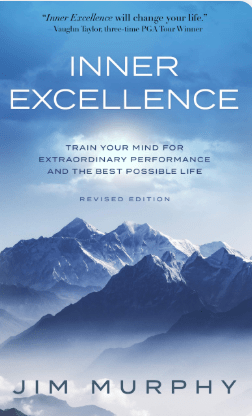
#10 Inner Excellence: Train Your Mind for Extraordinary Performance and the Best Possible Life by Jim Murphy
Goodreads 4.25 3,126 ratings / 360 reviews
Quick take: An inspiring, high-performing mindset manual aimed at athletes, leaders, and anyone who wants to push past mental blocks. Murphy merges personal story + coaching insights to guide the reader toward clarity, purpose, and “inner” strength—not just external wins.
What works:
- Athlete-tested, coach-refined credibility. Murphy draws on his own experience (professional baseball, minor leagues, coaching at high performance levels) and interviews with other athletes and leaders. This gives his tips weight and helps the advice feel grounded rather than vague.
- Accessible but actionable tools. The book includes mindset shifts, habits, reflective prompts, techniques for dealing with anxiety and self-doubt, and ways to master fear. Each chapter has useful take-aways that you can try immediately.
- Strong framing around purpose, effort, and growth over external metrics. Murphy repeatedly pushes back against measuring success by only results. Instead he emphasizes mental habits, character, presence, and overcoming internal barriers. That reframing is valuable for reducing burnout.
- Motivational voice & compelling story. The narrative of Murphy’s own struggles, plus his mindset transitions and reflections, make the content more relatable. It’s not just “do this exercise,” but “this is how I almost burned out, this is how I changed what was going on internally.” That adds emotional credibility.
What might not:
- Some overlap with existing performance and mindset-books. If you’ve read many self-help / sports psychology / mental toughness books, some ideas here (fear reframing, habits, self-talk) will feel familiar. Novelty is less in what is taught than how it’s packaged.
- “Do better, be better” language can feel heavy. For readers in difficult life contexts (trauma, systemic barriers, mental health challenges), some sections might feel aspirational or even discouraging if the path forward feels less available.
- Depth vs breadth trade-off. The book covers many tools and mental models but doesn’t always go very deep into every strategy. Some readers may want more science-backed data, case studies, or nuanced tactics for tricky internal resistance.
- Strong focus on performance & achievement. While Murphy argues for aligning presence, purpose, and performance, the emphasis is still significantly toward “high performance”—which might feel less relevant or off-putting if you’re seeking peace, rest, or anti-achievement balance.
Vibe & tropes:
Performance mindset • mental toughness • fear vs purpose • effort habits over outcome obsession • internal over external validation • leadership & growth • self-mastery • athlete / leader stories • overcoming anxiety/self-doubt.
Self-Help Scale: 🌿🌿🌿🌿 (4 / 5). Inner Excellence strong in motivational appeal, credibility, and practical exercises. It doesn’t quite hit a 5 for me because some of its strategies assume certain privileges (time, mental bandwidth, emotional safety) and because there are parts that feel more inspirational than deeply transformative for everyone.
Content notes: This is a nonfiction self-help / performance coaching book. Key themes include fear, anxiety, self-doubt, mental blocks, high expectations, pressure, and defining success. It includes stories of real setbacks, emotional struggle, and performance under pressure. No graphic content; no fictional drama. The “heavy” parts are psychological/emotional: dealing with the inner critic, resisting the urge to be perfect, pushing through discomfort, managing what you can’t control. Readers in sensitive or high-stress emotional states may find some prompts and reflections intense.
Verdict: Inner Excellence is a solid pick if you want a self-help book that’s both motivational and credible, one that doesn’t just tell you to try harder but shows you how to do internal work: managing fear, growing consistently, defining success in healthier ways. It’s especially strong for athletes, leaders, or anyone operating in high stakes / high pressure. If you want more rest, gentleness, or methods for emotional recovery (not performance), you may need to pair it with something more restorative.
Book-Critic Score 4.1/5
As an Amazon Associate I earn from qualifying purchases.
 book-critic.com